Skip navigation

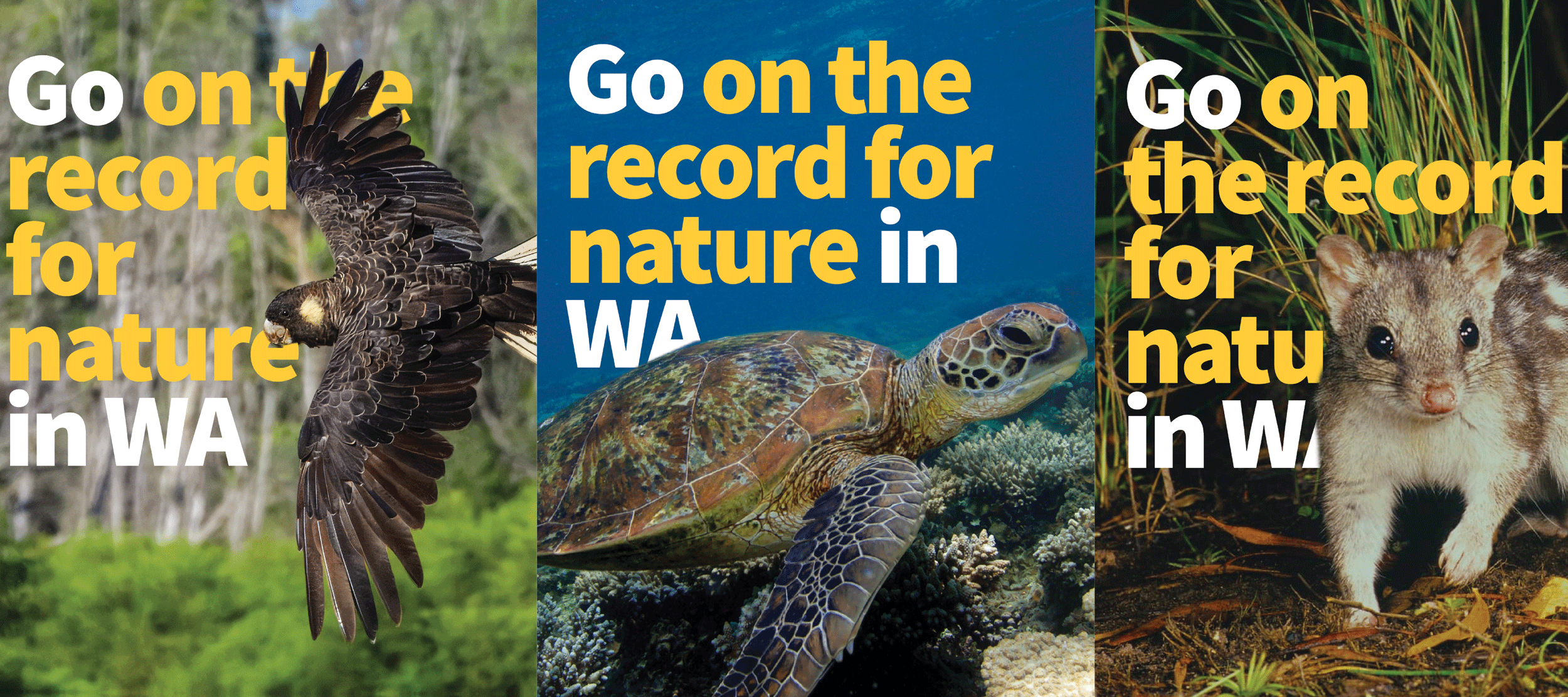
Have Your Say: Go on the record for nature

New national nature laws mark a major moment for environmental protection in Australia — but both the process and the laws themselves have fallen short. 

The government’s approach to consultation hasn’t been adequate. 

When community groups working on Country, and members of environmental organisations, aren’t even aware of the process or how they can have a voice in it, something isn’t right. 

As we saw during the 2020 Black Summer Bushfire Senate Inquiry (and so many public inquiries before and since), communities deserve a genuine chance to be heard. Community input leads to critical recommendations that the government must respond to. 

Families, groups, corporations, collectives, and individuals can still put their views on the public record. 

Have your say on Australia’s environmental laws. 

Go on the record. 

Be a voice for nature. 


This section gives a brief overview of Australia’s environmental laws


The Environment Protection and Biodiversity Conservation Act 1999 (the EPBC Act) is Australia’s national environment law.

It is supposed to provide a framework for the protection of Australia’s environment, including

  • world and national heritage
  • wetlands
  • threatened flora and fauna
  • migratory species
  • protection from nuclear actions
  • water resources, and
  • the marine environment.

These laws are also meant to recognise and promote the role of Aboriginal and Torres Strait Islander peoples and knowledge in protecting Country. 

Right now, these national nature laws fail to protect the environment. The latest review  (The Samuel Review) found that our natural environment is in an overall state of decline and confirmed that our laws are not fit for purpose. 

The failure of these laws sits at the heart of almost every environmental challenge across the country. You only have to look at Australia’s record as a global leader in extinctions and deforestation and rising emissions to see that the laws aren’t working.

They’re supposed to be key to protecting everything from black cockatoos, to precious places like Scott Reef, our jarrah forests and a safe climate future.

Australia’s environmental laws are legally required/mandated to be independently reviewed every ten years. 

Based on the recommendations from the review, the Albanese Government promised to fix and update Australia’s nature laws. 

This section gives a brief overview of the government’s new reforms, and the current parliamentary process.


The Federal Governments proposed new nature laws (the Environment Protection Reform Bill 2025 and six related Bills), have now been passed by Parliament.

Conservation Council of WA views the revised Environment Protection and Biodiversity (EPBC) Act as a missed opportunity by the Albanese Labor Government to enshrine robust new laws to properly consider climate impacts and protect nature.

The government undertook limited consultation to inform new national nature laws, and substantial concerns remain about the process. 

These Bills were rushed through in the last sitting week of Parliament in 2025, despite a public inquiry into the reforms still running. 

The public inquiry is open and invites submissions, giving individuals and organisations the opportunity to share their views.

Having your say is one of the most powerful ways to show decision-makers that Western Australians want strong laws that actually protect nature.

Even though the Bills have now been passed, the inquiry Committee can still play an important role in making recommendations for further changes and we encourage you to make a submission as soon as you can to ensure your views and perspectives are on the public record.

Submissions close Friday 5 December.

Note: The Senate was able to consider, debate, and vote on the Bills even though an inquiry is still in progress. The inquiry is expected to produce a report with findings and recommendations by 24 March 2026, to which the government is required to respond. Regardless of the report’s final outcome, the longer fight to protect nature continues. Learn more about the plan to bring nature back from the brink in Western Australia.

This section provides a high-level summary of key concerns across the environmental movement in WA. It is not an in-depth legal analysis of where the new nature laws fall short, but a general overview that may help community members consider key points when making a submission or writing to a Member of Parliament.

The reality of what the revised EPBC Act actually means for nature is yet to play out. We will share further analysis and insights on the implications of the laws as more information becomes available.


When considering the laws that have been presented, it is important to consider two core questions: Do the new laws  

  1. address, not exacerbate, the failings of the previous Act, and 
  2. strengthen national nature legislation in order to actually protect our iconic matters of national environmental significance and deliver outcomes for nature, community, a safe climate and future generations. 

Conservation Council of WA considers the newly passed laws to fall short of the protections our environment urgently needs. 

The new nature laws, as they stand, remain highly skewed towards industry. 

However, there have been some positive amendments secured in negotiations between the Albanese Labor government and the Greens that will improve environmental protection.  


Some of the positives

  1. Australia will have National Environmental Standards, with legally enforceable rules to protect endangered wildlife and ensure ecologically sustainable development. The government has committed to an inquiry reviewing the National Environmental Standards so that once the standards are drafted they can be scrutinised. As part of this process, it is important that the community speaks up for the strongest possible new national standards. Strong National Environmental Standards are essential as they will provide a benchmark that can challenge ministerial overreach, set enforceable precedents, and hold the EPA to account. Consultation on National Standards for Matters of National Environmental Significance and Environmental Offsets is currently open until 30 January 2026.

  2. Regional Forest Agreements and "continuous use" Land Clearing will no longer be excempt from environmental assessments and cannot be approved where it will have 'unacceptable impacts', assessed against the new National Environmental Standards. This means clearing remnant vegetation that will have a significant impact on threatened species, ecological communities, globally listed wetlands will now be assessed by federal government processes. 

  3. New rules require big polluting companies to report their Scope 1 and 2 emissions and outline their plans to reduce them.

  4. Large coal mining, coal seam gas fracking and all types of unconventional gas developments that may have significant impact on water resources will continue to be assessed by the Federal government under the "water trigger" in the EPBC Act. This will be retained by the Federal government instead of being handed to state and territory governments. 

  5. The Minister will be able to prevent projects from proceeding that are deemed to have “unacceptable impacts” for respective Matters of National Significance before the projects are fully assessed. In addition, specific threatened species/"protected matters" will be excluded from being 'offset' through new "Restoration Contributions Fund".


Some of the concerns 

  1. New huge sweeping Ministerial powers that means the Minister can make rulings on how the EPBC Act and related mechanisms (such as National Environmental Standards) should be applied. This includes overriding environmental protections in the 'national interest'. Ministerial powers should be limited.

  2. New pathways to hand approval powers to state and territories (known as 'devolution' through bilateral agreements). These laws will enable the handing of powers to state and territory governments, which have shown they can't be trusted to protect our nature and climate. In Western Australia, conditions attached to state approvals often end up weaker than those imposed by the Commonwealth. We have a similar EPA set-up in WA – and it has not worked to halt the steep decline of nature. It is imperative that the federal government retain decision-making powers for destructive projects like Woodside’s Browse Basin. The federal government must have oversight and limit state and territory government approval powers.
    .
  3. Streamlined assessments pathways which could fast-track project approvals without proper considerations. These include

    • the ‘streamlined assessment pathway’  
    • the ‘bioregional plans’ pathway that delivers ‘go’ and ‘no-go’ zones in designated geographical areas, which appears to function more as a development zoning tool than a mechanism for conservation and protection. However, it does introduce landscape scale planning rather than project-by-project assessment. Bioregional planning zones need to be strengthened. 
    • the ‘national interest pathway’, which could approve projects even if they would otherwise be inconsistent with the Act's standards or have "unacceptable impacts" 
    • Note: Coal and gas projects are now explicitly excluded from these three streamlined assessment pathways and will be assessed under a full environmental assessment process, including public consultation. 
  4. For the first time, Australia will have a National Environment Protection Agency with powers to enforce Australia’s new environmental laws, issue orders and penalties, and conduct audits. However, it will not be fully independent and will act on instruction from the Minister, who has sweeping power to override departmental and scientific advice. 

  5. The laws remain silent on climate impacts.We will continue to advocate fortheGovernmentto consider climate pollution when making decisions,andfordecision-makersto havethe ability tohalt projects that would cause significant climate harm – like polluting coal and gas projects.


We need to make sure the new elements of the EPBC Act are designed to be effective and capable of reversing our trajectories of environmental degradation and extinction. For example, we must ensure the laws prevent decisions that are inconsistent with recovery plans, and that these plans can be fully implemented, with critical habitat properly protected. 

Much more work lies ahead, particularly in Western Australia, where we have a state government that famously took credit for sinking the last round of attempted reforms. Read about the reforms needed in WA to bring nature back from the brink.

This section explains the practical steps involved in making a submission. Key points you might want to address in your submission are provided in the section 'The laws at a glance'. To make a submission visit the 'Make a submission' section. 


If you want to have your say on Australia’s nature laws, you can share your experiences and ideas by writing to the Senate committee – this is called making a submission.

To support community members, families, and groups take part in this process, the Conservation Council of WA has created a friendly online submission tool. To make a submission visit the 'Make a submission' section. 


Other ways to make a submission

    • Use the ‘Upload Submission’ option on the right side of the page and follow the steps to share your submission. 
    • Note: you’ll be required to create a free Parliament of Australia account to submit via this portal. 
    • If you upload your submission through the Senate's website, you will receive an email straight away that lets you know that your submission has been received.
  • Directly email [email protected] or [email protected]

    • This is not an automated process and it may take longer for you to receive an acknowledgement that your submission has been received.

  • Send via Post to:

Committee Secretary
[Senate Standing Committees on Environment and Communications]
Department of the Senate
PO Box 6100
Parliament House
CANBERRA ACT 2600
AUSTRALIA

If you can't write a submission, you can convert your spoken words to written text using dictation features on your mobile phone, device or computer. Find out how to do that here.

When you make a submission be sure to follow the rules for confidential and non-confidential submissions on the Senate website here. For confidentiality, you must clearly state “Confidential” on your submission and remove personal or contact details (put them on a separate page).


What happens after you make a submission

After you lodge your submission, the Senate committee will review it and decide whether to accept and publish it. This process can take several weeks, and you will be notified of the outcome. Find out more on this process here.

To support community members, families, and groups take part in this process, the Conservation Council of WA has created a friendly online submission tool.


Press here to make a submission now

This will redirect you to an online submission tool.

This section lists key resources and further information about the EPBC reforms. If you need anything else, please contact the Conservation Council of WA.


Submissions and Inquiry information

Australian Government | Environment protection reforms information
https://www.dcceew.gov.au/environment/epbc/epbc-act-reform

Senate Inquiry | Main page for the Environment Protection Reform Bills Inquiry
https://www.aph.gov.au/Parliamentary_Business/Committees/Senate/Environment_and_Communications/EPRBill48P

Existing submissions | Read submissions already made to the Senate Inquiry
https://www.aph.gov.au/Parliamentary_Business/Committees/Senate/Environment_and_Communications/EPRBill48P/Submissions

Senate Environment and Communications Legislation Committee | Watch inquiry hearings and parliamentary debate through livestreams and recordings
https://www.youtube.com/@AUSParliamentLive/streams

Environmental Justice Australia general advice on writing a submission | Submission writing toolkit 
https://envirojustice.org.au/submission-toolkit


Key analysis and commentary

Conservation Council of WA | Op-ed by Executive Director Matt Roberts “Australia’s environment minister should be fighting for nature – not faster approvals”
https://www.ccwa.org.au/fightingfornature

Environmental Justice Australia | Legal guide summarising the five major issues identified in the Bills
https://envirojustice.org.au/wp-content/uploads/2025/11/EJA-EPBC-reform-submission-guide-101125.pdf

Environmental Defenders Office | EPBC reform overview and submission guidance
https://www.edo.org.au/2025/11/14/epbc-act-reforms-get-your-submission-in

Joint position of State and Territory conservation councils across Australia, including Conservation Council of WA | Read the open letter 
https://environmentvictoria.org.au/2025/11/24/joint-position-of-state-and-territory-conservation-councils-on-epbc-act-reform

Aboriginal Land Councils’ perspectives | NT Land Councils express concerns about consultation failures
https://www.abc.net.au/news/2025-10-29/nt-aboriginal-land-councils-accuse-federal-gov-consult-failure/105946474

Biodiversity Council | Resources and analysis
https://biodiversitycouncil.org.au/resources/getting-the-epbc-act-right

Climate Council | EPBC submission guide and climate context
https://www.climatecouncil.org.au/actions/epbc-submission


Explainers, webinars and events

Environmental Justice Australia Webinar | Australia’s Environment Laws: What’s in the reform package?
https://www.youtube.com/watch?v=5jdAU3Jn8DM

Australian Marine Conservation Society | EPBC explainer video (Instagram Reel)
https://www.instagram.com/reel/DRgg6D6jWwZ