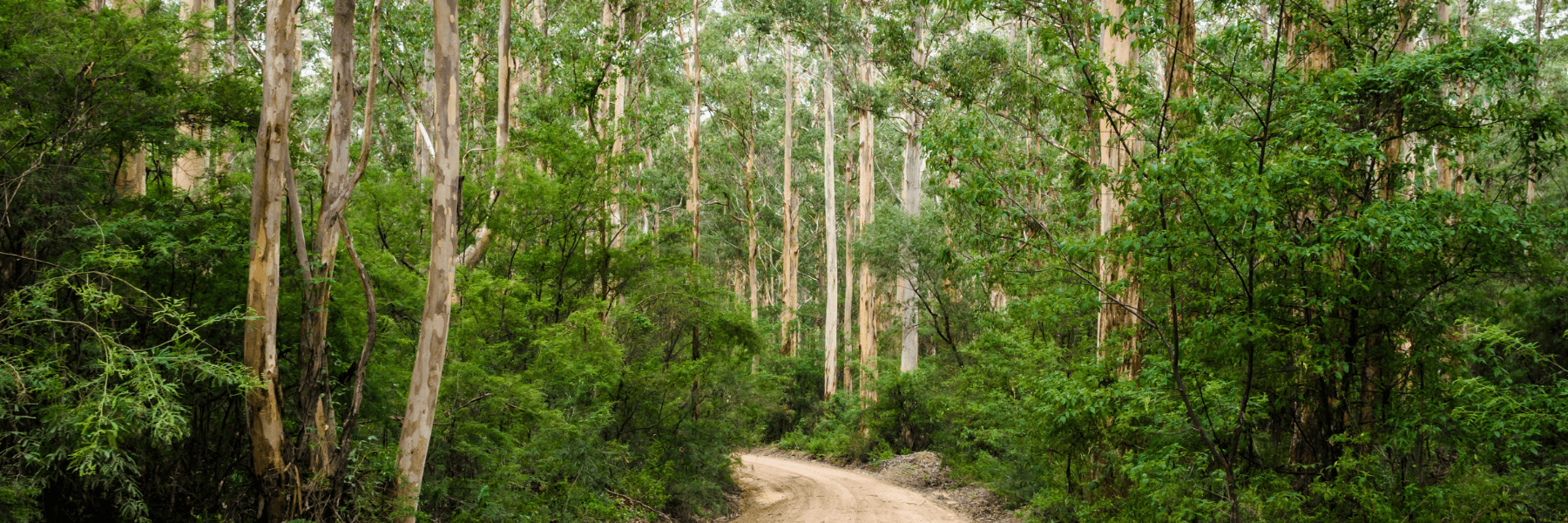
With the forest substrate gone, ecological restoration of the NJF ecosystems is not possible. Compared to the original habitat, rehabilitation efforts result in a significantly diminished ecological structure, composition and function, reducing habitat quality for already threatened fauna species - counter to their Recovery Plans*.
Over 410 square km of the NJF has been cleared for mining since 1963. This could reach 120,000 square km by 2075 (EPA WA, 2024).
The Boddington bauxite mine expansion will clear 3,885 ha of the NJF, in addition to 13,633 ha previously approved for mining where clearing is yet to begin (EPA WA, 2024).
The Jarrah Forest to be impacted is largely intact, with high species richness and minimal weed invasion (South 32, 2022). Habitat loss will impact eight conservation significant fauna species, and five endangered or critically endangered species, including Forest Red-tailed and Baudin’s Black Cockatoos, Woylie and Western Ringtail Possum.
After a Public Environmental Review, in mid-2024, the EPA recommended conditional approval of the Boddington mine expansion, despite stating "pressures and threats to the NJF are yet to be fully described ... due to limited understanding of complex environmental interactions at a system level, the lack of quality data and information, and the absence of a whole-of-ecosystem assessment."
The EPA has noted significant ‘knowledge gaps’ in government data on the Northern Jarrah Forest and recommended a whole of government approach to respond to these gaps. Recommended conditions require new surveys of conservation significant flora and fauna and future reporting to address past compliance failures and data inadequacies.
The EPA considered renewed rehabilitation efforts and biodiversity offsets sufficient to address ongoing mining impacts. However, rehabilitation is expected to result in only ‘a reasonable degree of ongoing ecological function’. Despite offsets being the ‘least preferred option’, EPA conditions feature many, particularly for threatened fauna species’ habitat losses. This contravenes the IUCN policy that offsets should not allow for processes that risk the further endangerment of threatened species.
An appeal process upheld the EPA’s assessment and, substantially, its recommended conditions (OAG WA, 2024). State and federal government approvals followed.